BJP and Congress fight over Vande Mataram stanzas
150 years of Vande Mataram: BJP, Congress clash over missing stanzas
Prime Minister Narendra Modi is leading a special discussion in Parliament to mark 150 years of the national song, Vande Mataram. The discussion in Lok Sabha will last around 10 hours and will be concluded by Defence Minister Rajnath Singh. Meanwhile, Home Minister Amit Shah will initiate a discussion on the topic in Rajya Sabha. The event comes at a time when politics around the song has intensified, with both BJP and Congress taking strong positions over its history and significance.
The BJP claims that Congress deliberately removed several important stanzas of Vande Mataram in 1937. According to the party, this act divided the soul of the national song and contributed to communal tensions, eventually influencing the partition of India. PM Modi has stated that these stanzas were an integral part of the national song and that their removal was an injustice to what he calls the “maha mantra” of India. He emphasized that Vande Mataram became the voice of India’s freedom struggle and reflected the feelings of the entire nation.
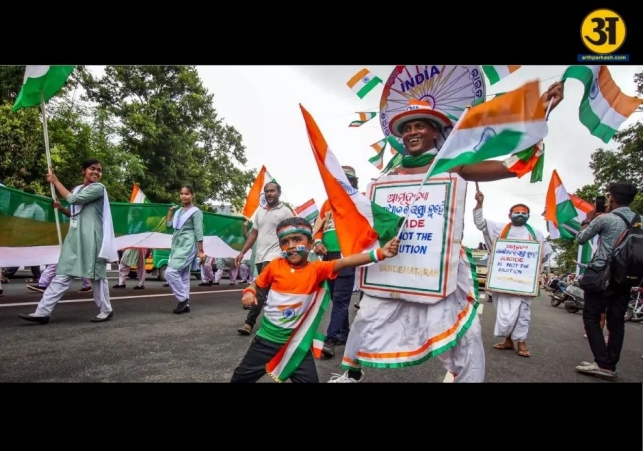
The year-long celebration of the 150th anniversary of Vande Mataram was launched by PM Modi on November 7. He said the aim of the initiative was to create awareness among youth and students about the importance and history of the national song. During the Lok Sabha discussion, he is expected to highlight several important and lesser-known facts about Vande Mataram and address the alleged “missing stanzas” issue raised by the BJP. Officials have said that this debate will bring many unknown aspects of the song to light and help educate the public about its significance in nation-building.
Congress response and historical context
In response to the BJP’s claims, the Congress party has defended the 1937 decision regarding Vande Mataram. The party explained that the Working Committee at the time, which included leaders like Mahatma Gandhi, Jawaharlal Nehru, Sardar Patel, Subhas Chandra Bose, Rajendra Prasad, Maulana Azad, and Sarojini Naidu, chose to adopt only the first two stanzas of the song. The reason given was that the remaining stanzas contained religious symbols, which could have caused discomfort among certain communities. Congress stated that the decision was intended to respect all communities and maintain unity, not to create division.
The party also criticized PM Modi for what it called an attempt to distort history and shift public attention away from current issues. Congress leaders argue that debates over the song should be based on historical context and not political narratives. They maintain that the song’s partial adoption in 1937 was a compromise to ensure that Vande Mataram could be accepted by all Indians without offending anyone’s religious beliefs.
ALSO READ: Government expands crackdown by banning 23 organisations under UAPA in five years
Despite this disagreement, the 150-year celebration has become an opportunity for both parties to present their perspectives. While the BJP focuses on the importance of all original stanzas and their connection to India’s freedom struggle, Congress emphasizes the practical reasons for limiting the song to two stanzas to maintain social harmony. PM Modi is expected to use the Lok Sabha discussion to provide historical insights and counter Congress’s narrative, highlighting what he considers overlooked or misrepresented aspects of Vande Mataram.
The national song, written by Bankim Chandra Chatterjee in the 19th century, has always been a symbol of India’s fight for independence. It played a key role in inspiring freedom fighters and was later adopted as a national song to reflect patriotic sentiments. The ongoing debate over the missing stanzas highlights how historical interpretations can influence present-day politics and the importance of revisiting history to educate the younger generation.
As the discussions continue, the focus remains on educating citizens, particularly students, about the historical and cultural significance of Vande Mataram. The government hopes that the year-long celebration and parliamentary debate will promote a sense of unity, patriotism, and awareness of India’s rich heritage while addressing concerns raised by different political groups.
Related News