

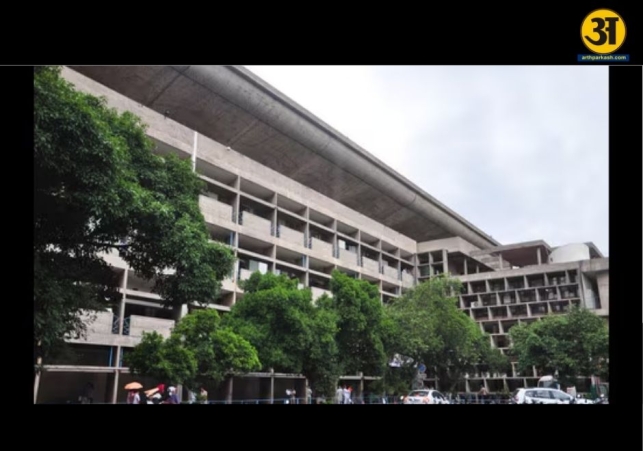
The Punjab and Haryana High Court on Wednesday directed the Chandigarh Administration to work round the clock and appoint a consultant by January 8 for designing a new block in the High Court complex. The project is part of a large holistic development plan for expanding the court complex and is estimated to cost around ₹1,300 crore.
The direction was given by a bench of Chief Justice Sheel Nagu and Justice Sanjiv Berry while hearing a public interest litigation (PIL). The court clearly stated that there should be no delay in the process and fixed strict timelines for the administration to follow.
The High Court was hearing a PIL filed in 2023 by Vinod Dhatterwal, secretary of the High Court Employees Association. The petition seeks the implementation of a long-pending holistic development plan to address the shortage of space in the High Court complex.
Earlier, on December 5, the court had directed the Chandigarh Administration to adopt a single source selection method for appointing the consultant. However, this order was modified on Wednesday. The court accepted the administration’s submission that single source selection was not possible under the rules.
Instead, the court directed the administration to invite an expression of interest (EOI) to select a consultant. The court ordered that the entire process, including awarding the work, must be completed by January 8.
The bench clearly instructed the Chandigarh Administration to work on a 24x7 basis to meet the deadline. The court also directed the chief secretary of Chandigarh to personally ensure that the timeline is strictly followed.
The next date of hearing in the case has been fixed for January 9. The court warned that any delay would not be taken lightly, as the matter involves important public infrastructure and judicial functioning.
During the hearing, counsel for the Chandigarh Administration informed the court that the administration is ready to move quickly. He said the tender process would begin as soon as the scope of work is submitted by the High Court.
ALSO READ: Bird flu outbreak in Kerala: Causes, risks, symptoms, treatment and what you need to know
The holistic development plan aims to solve the serious space shortage in the Punjab and Haryana High Court complex. A High Court-appointed committee, which includes two judges, has already studied the issue in detail.
The committee has recommended the construction of four new blocks behind the existing heritage building. These new blocks will include 30 to 35 additional courtrooms. The total built-up area of the proposed construction is around 11.42 lakh square feet.
Apart from courtrooms, the project will also include judges’ chambers, bar rooms, lawyers’ chambers, and offices for the advocate generals of Punjab and Haryana. Offices for the central government and the Chandigarh Administration will also be part of the new complex. Administrative and judicial branches, along with other support services, will be included in the design.
A major part of the project also focuses on parking facilities. The plan proposes additional parking space of around 11.17 lakh square feet, which can accommodate nearly 3,500 four-wheelers. This is expected to greatly ease parking problems for judges, lawyers, staff, and visitors.
One of the main challenges in the project is its heritage status. The Punjab and Haryana High Court building was opened in 1955 and is part of the Capitol Complex designed by famous architect Le Corbusier. The Capitol Complex was declared a UNESCO World Heritage Site in 2016.
Because of this status, the project needs clearance from UNESCO before construction can begin. During the hearing, the court was informed that the deadline for submitting the holistic development plan to UNESCO has been extended to January 21.
The Chandigarh Administration told the court that this extension gives enough time to complete the consultant selection process. The administration assured the court that the entire process would be finished within 15 days and that all timelines would be strictly followed.
The court allowed the administration to float a tender for selecting the consultant. However, it made it clear that if only one bidder responds to the expression of interest, the process should not be stopped. The court said that the work must move forward without unnecessary delays.
The scope of work for the consultant has also been clearly defined by the court. It includes designing courtrooms, judges’ chambers, bar rooms, lawyers’ chambers, administrative offices, and parking facilities. The consultant will also have to consider heritage guidelines and UNESCO norms while preparing the design.
By directing the administration to work 24x7, the High Court has sent a strong message that the expansion of the court complex is a priority. The project is expected to improve working conditions, reduce overcrowding, and support the growing needs of the justice system in Punjab, Haryana, and Chandigarh.
Copyright © © 2022 Copyright. All Rights Reserved with Arth Parkash